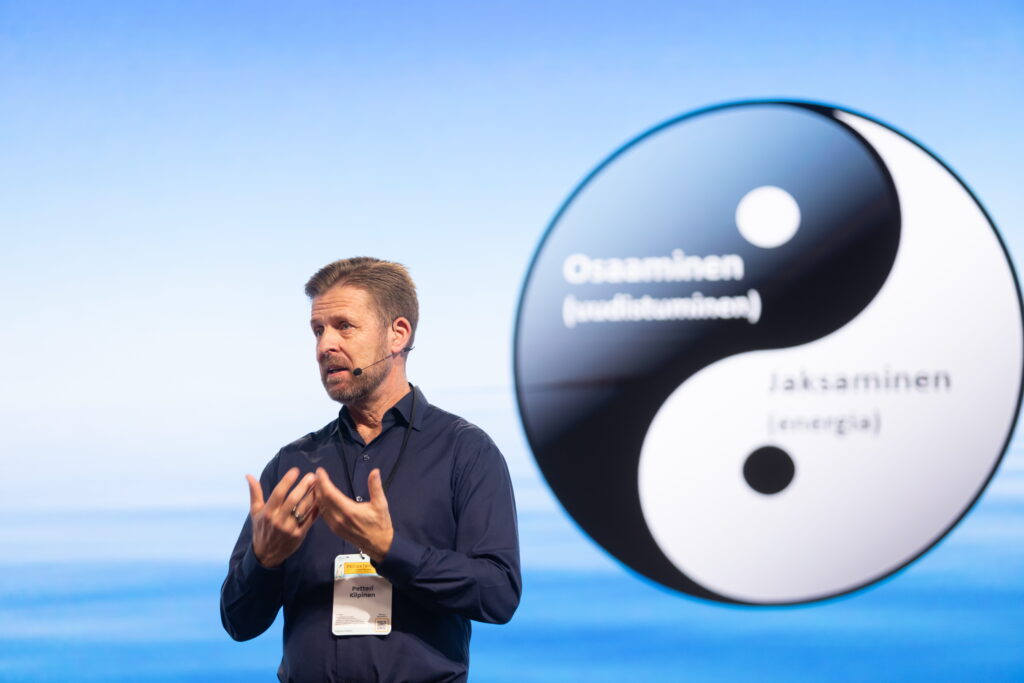
At Project Days 2025, coach and business leader Petteri Kilpinen gave an inspiring talk on what it really takes to excel. Now he shares the concrete ways in which leaders and professionals alike can improve their recovery and be energised for the things that matter most to them.
Text by Veera Niemelä, Viestintätoimisto Darling
Photos Opa Latvala
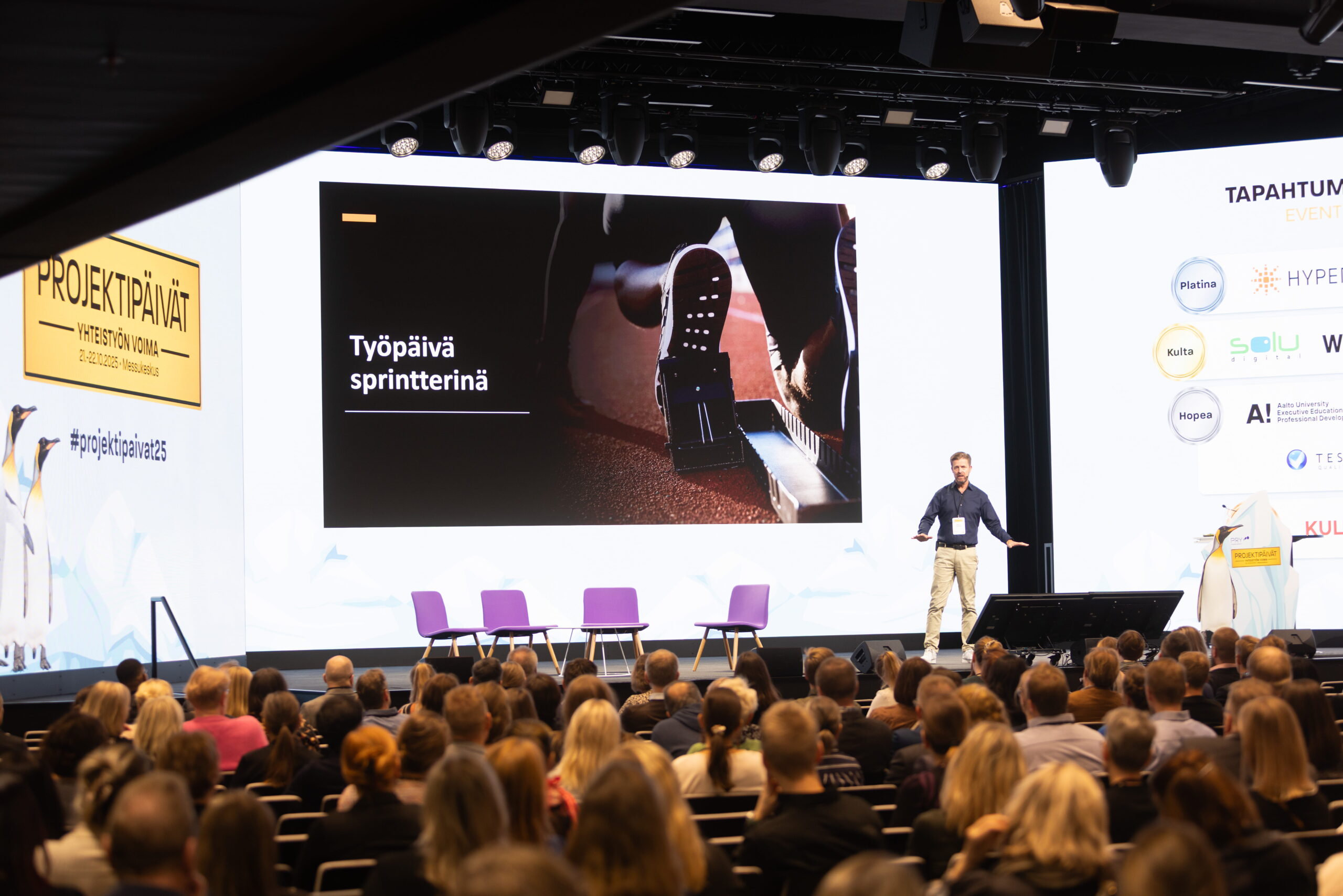
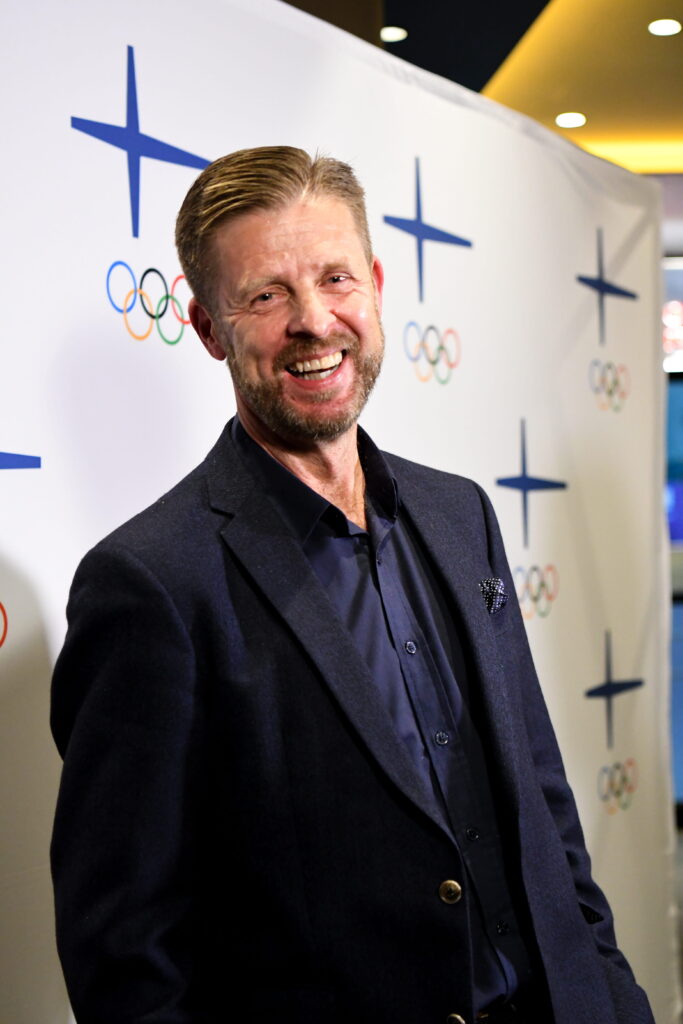
Petteri Kilpinen is Chairman of the Board of the Finnish Olympic Committee, a business leader, business coach and government professional who wants people to live a good life by their own standards.
About 10 years ago, Kilpinen noticed that working life was putting so much strain on people that job satisfaction and life satisfaction were declining. This led him to become interested in managing human performance and potential.
– Exhaustion is too high a price to pay to get by at work. Success at work doesn’t have to be a compromise – you can get everything you want by learning to manage yourself better,” he says.
Kilpinen has a long background as an advertising agency director, and for the last eight years he has been responsible for the wellbeing business at the Aava Medical Centre. He coaches corporate management teams and executives, and is the author of four books.
Managing potential as a tool for a better life
By managing human potential, Kilpinen means that work is organised in such a way that people are able to be at their best at work.
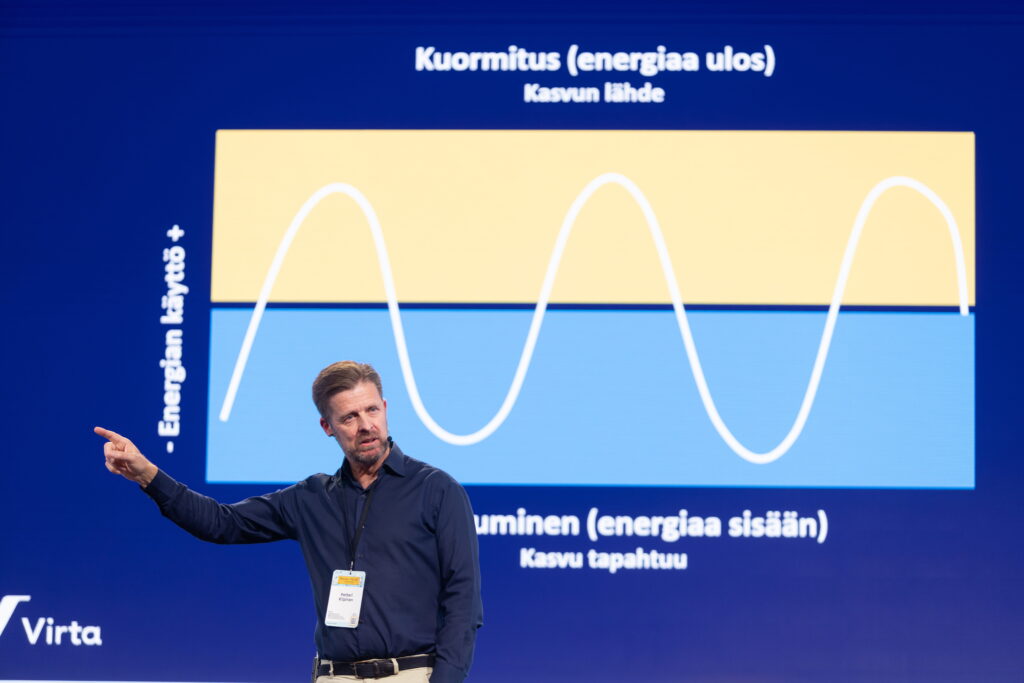
– For example, if you are constantly in meetings without breaks in between, it is not possible to be at your best. You need to alternate between load and recovery. Most people are average versions of themselves because they don’t recover properly. I understand that a head of state has reasons to be exhausted at work, but we ordinary office workers shouldn’t ruin our lives with that,” says Kilpinen.
Developing people’s potential is, in his view, the responsibility of both employees and managers. Free time is also reflected in work performance, so it’s worth looking at the quality of that too.
– An old-fashioned leader says that employee well-being is not a company issue. I believe that the well-being of people is the responsibility of the company and the individual. People need to have their basic lifestyle under control in order to be able to cope at work. If, on the other hand, work is too demanding, there is no willpower to make sensible choices in leisure time, even if you have good intentions. It is also in the interests of companies that people recover,” says Kilpinen.
Breaks and interaction to restore
The work of a project professional often involves navigating tight deadlines, being resilient to change and working in a team. In this kind of work, taking care of and consciously planning for recovery is particularly important.
– In the middle of a normal eight-hour working day, it’s worth planning three restorative moments to slow down. You can only concentrate on one thing for 60-90 minutes at most, after which your performance and concentration levels drop considerably. We need recovery moments to be cognitively sharp,” says Kilpinen.
He also stresses the importance of positive interaction as a means of recovery. Face-to-face encounters can also feed learning and creativity, which are valuable for work.
– If you are tired, the quickest way to refresh yourself is through positive interaction. It is built into us that our happiness comes from our relationships with other people. People also learn through encounters. Creativity requires dialogue, and dialogue leads to better ideas,” Kilpinen concludes.
A better life requires thoughtful action
Kilpinen stresses that it is not realistic to be at your best every moment of the day. That’s why it’s essential to identify what’s most important to you in life and focus your energy on those moments.
– Many say that family is their top priority, but admit that they are not at their best when they are with their family. The leaders I’ve trained are good at making and sticking to strategies at work, but don’t use the same skill in their spare time. Most people don’t plan, they just hope for change, or take a quick fix that doesn’t bring about lasting change. Instead, they should make choices that become permanent habits,” says Kilpinen.
For Kilpinen, the three most important things in life where he focuses his energy are family, work and hobbies. They are not wishes, but the result of planning.
A working day is a sprint, not a marathon
Petteri Kilpinen coaches business leaders, and in his current role at the Olympic Committee he also works with top athletes. He believes that managers could learn from athletes.
– Athletes are constantly thinking about how to optimise what they do and get the best out of their performance. Leaders should think the same way. The difference between the two is that a top athlete’s competitive season is a limited part of the year, while a manager’s life is a competitive season every day.
The performance of a leader is therefore of great importance in the workplace. Kilpinen says that leadership is not what the leader does, but what the organisation does under the influence of the leader. When a leader is not performing, he or she is not making an impact on the team.
In a continuous competitive season, the role of recovery is highlighted. Kilpinen encourages people to think of their working day as a sprint rather than a marathon. It’s when you pick the peak moments of the day when you need to be at your best – the prelims, semi-finals and finals – and the rest of the time you work at a good routine level. Coming home to your loved ones is the prize-giving.
Kilpinen says the biggest misconception about performance is that the best results come from doing more, sacrificing breaks. He uses the metaphor of a runner’s interval training. When you take breaks, you can run each stroke harder than the last.
– The idea comes from pre-industrial times that if you spend more hours in the factory, the result will be better. In information work, more time is no guarantee of a better result. You can’t be hard-working and productive without taking breaks,” says Kilpinen.
The crisis of stamina in Finnish working life
Improving well-being and performance are issues that affect the whole Finnish working life. Over the last 15 years or so, there has been a significant increase in mental health-related disability and sickness absence. Almost all of the HR managers Kilpinen met are concerned about their employees’ well-being.
– A turnaround is needed now, as many experts working in demanding information work are reaching the limits of their endurance. A glimmer of hope is that never before in Finland has the importance of well-being at work been discussed as much as it is now. The next step should be to ensure that well-being is not outsourced to the HR department, but is part of local management. Employee benefits such as job rotation alone will not solve the problem,” says Kilpinen.
An energetic life is about conscious choices
For Kilpinen, inspiration and energy in everyday life comes not only from family and hobbies, but also from being able to make a positive impact on people through her work. The speech at the Project Days was a moment when he was at his full potential.
– I had finished the previous job on time, had a good lunch and walked outside. I arrived early and got to know people a bit, and didn’t arrive at the last minute. That’s when I got the most out of myself and lived up to my teachings.
Kilpinen encourages everyone to examine what kind of life they would like to live, and how to achieve it. He did so himself as a running enthusiast.
– Have a 90-minute conversation with yourself about how you live now, how you want to live and what choices you need to make to get there. When I started running and had five kids at home, I decided to start running in the mornings instead of in the afternoons, when it was calmest. It was a choice that meant, for example, that I stopped watching TV in the evening. When you dare to leave something behind, you can start something new.
Petteri Kilpinen
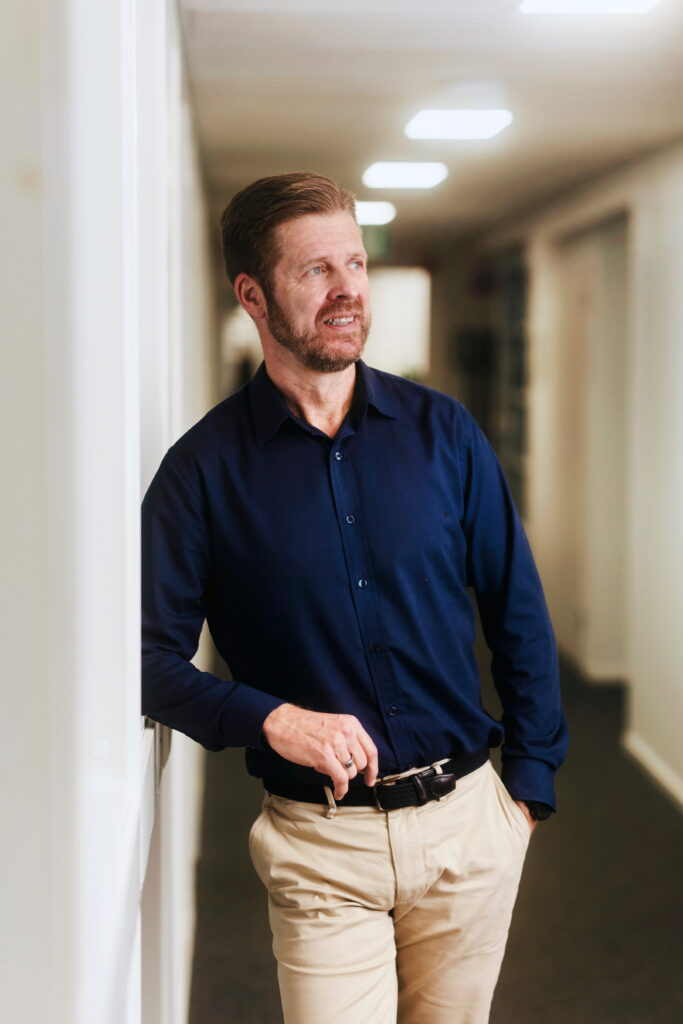
Petteri Kilpinen is the Director of the Wellbeing Business at Aava Medical Centre and Chairman of the Board of the Olympic Committee. He is an experienced business leader, government professional and executive coach who has served on 21 boards, lectured in more than 10 countries and published four books.
Kilpinen has worked in the management of several companies, including as CEO of TBWA, Finland’s largest advertising agency. He holds an eMBA and an engineering degree, and has also studied management at Harvard Business School.
Kilpinen’s books cover topics such as work life, leadership and performance: Irtiotto (2022), Variance (2019), Inspired – how to lead and succeed in a changing working life? Inspired , inspired and inspired to succeed in changing the world (2017) and In the Flames! – How does a leader inspire people to change? (2009)
In his spare time, Kilpinen spends time with his family, including his wife and five sons. He also enjoys running, and has run several marathons and achieved success in running races at home and abroad.